The framework
The Profiled framework
Mental skills cover a huge range, from managing emotions to speaking up to making decisions under pressure. So we created a framework that turns a complicated topic into manageable layers that coaches and athletes can work with.
At the highest level there are three kinds of readiness: Understand, Connect and Perform. We have mapped 20 skills to these pillars and each skill comes with practical tools you can use in training or games, so mental skills become something you practise rather than something you hope for.
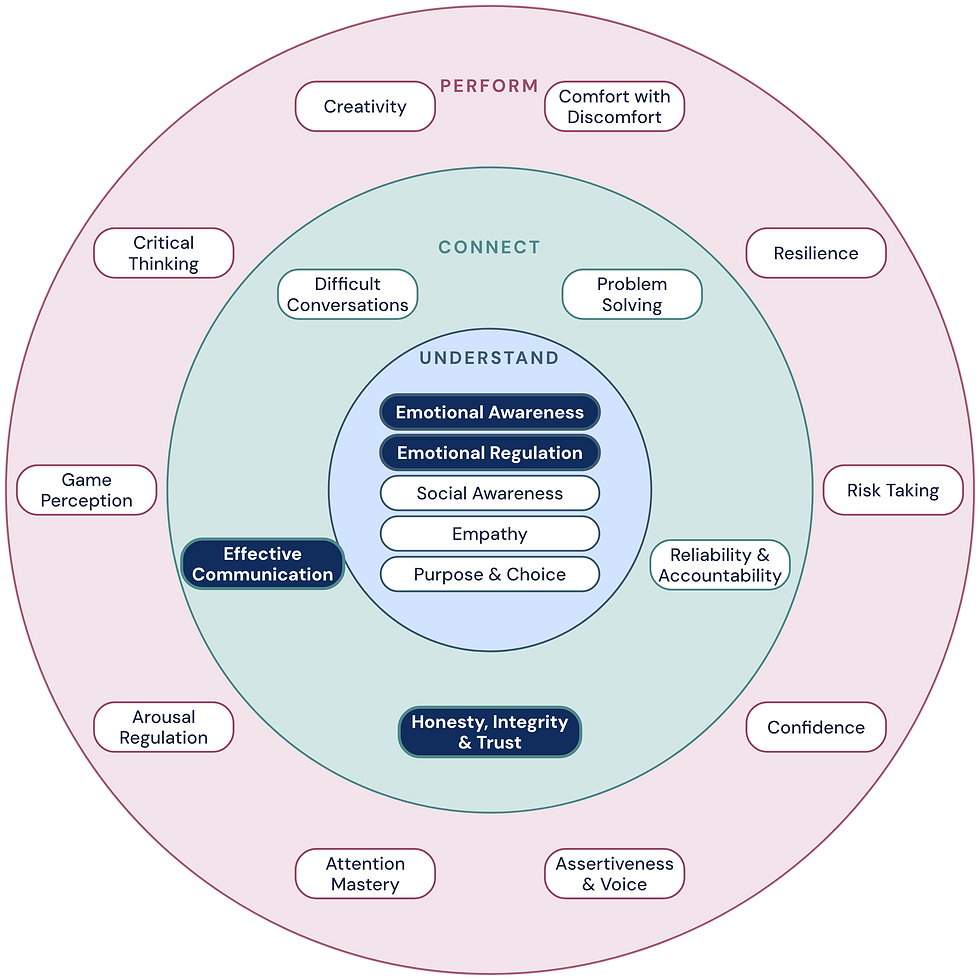
Core skill: many other skills build on it
Three kinds of readiness
The 20 skills sit in three rings: Understand, Connect and Perform. Each ring is a kind of readiness, and each is taught as a set of workshops.
Understand
5 skills
“I understand myself and others.”
This is where it starts: noticing, naming and managing emotions as they happen, and understanding what others feel and what drives them.
Taught as
- Understanding yourself
- Navigating people and environments
Connect
5 skills
“I can speak up, work things out, and follow through together.”
This turns individual awareness into healthy, accountable relationships, so teams or groups can tell the truth, disagree well and move together under pressure.
Taught as
- Speaking up and working things out
- Following through together
Perform
10 skills
“I can act, adapt, and decide when it counts.”
This turns capability into performance when it matters: staying engaged under pressure, backing yourself, holding focus and making good decisions.
Taught as
- Staying in it under pressure
- Backing yourself
- Focus and energy
- Making good decisions
Four skills that others build on
We mapped how the skills depend on and interact with each other. Again and again, the links led back to the same four. We call them the core skills, and they are the foundation for your mental skills development journey.
UNDERSTAND
Emotional Awareness
Noticing what you feel and naming it precisely.
UNDERSTAND
Emotional Regulation
Choosing how to respond to what you feel.
CONNECT
Honesty, Integrity & Trust
Being straight with each other, and able to rely on each other to mean what is said.
CONNECT
Effective Communication
Getting your message across clearly and understanding what others are telling you.
How it works
Working through 20 skills, and the academic and clinical language that comes with them, isn't realistic for most athletes or coaches. So we linked every skill back to common problem statements: the things you see or feel in training and games.
All we need from you is a description of what you are seeing or feeling, and we point you in the right direction.
What you get
Your profile
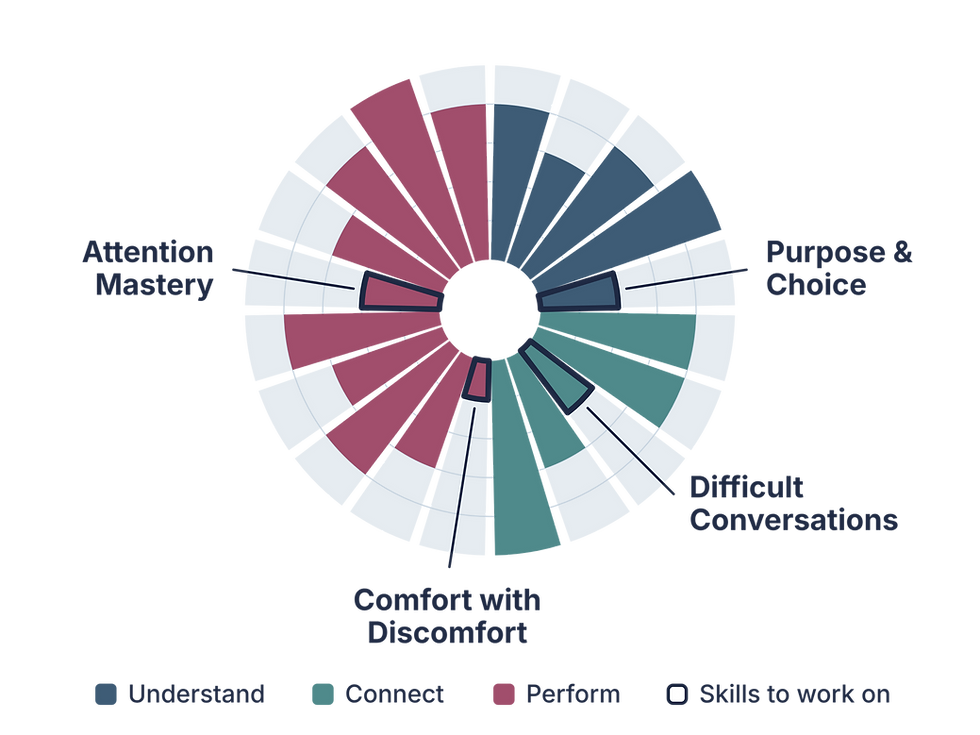
Each skill is a wedge, coloured by Understand, Connect or Perform. Longer wedges are your strengths. The shorter, outlined wedges are the skills to work on next. Your profile is built one skill at a time.
1
Describe what you see or feel
Choose the statements that sound like you or your team, in plain words.
2
We point you in the right direction
We often point you to the core skills first, because so many others build on them. We also suggest stretch skills so you can keep progressing your profile.
3
Practise and build your profile
Work on the skills with tools you can run in a normal training session or game, and watch your profile grow.
What makes Profiled different
Profiled is built for practice, not theory. Every skill links to tools you can run in a normal training session or game.
Start with what you see.
Describe the problem in plain words and we point you to the skills. You don't need the vocabulary first.
Repeatable habits.
Small, regular practices that build into habits in training and games.
Theory into tools.
We turn performance psychology into practical resources that suit development environments.
Beyond sport.
The skills carry into study, work and life.
Shared language.
One vocabulary for athletes, coaches and families, so you can learn and grow together.
Not sure where to start?
Tell us what you're seeing and we'll help you work out which skills to look at first.